In the early years of Islam in Makkah, when the Prophet Muhammad, peace be upon him, was deep in conversation with several of the most powerful men of Quraysh, hoping that their conversion would bring relief to a persecuted community, a blind man approached him.
His name was Abdullah ibn Umm Maktum. He was a cousin of the Prophet's wife Khadijah, may Allah be pleased with her. He was poor, blind, and unimportant in the eyes of the world. He came that day to ask the Prophet a question about Islam.
The Prophet, focused on his conversation with the Qurayshi leaders, frowned and turned away. The moment passed. The blind man went unanswered.
What happened next is one of the most striking interventions in the entire Quran. Allah revealed the opening verses of Surah Abasa, directly addressing the Prophet himself:
"He frowned and turned away, because the blind man came to him. But what would make you know, perhaps he would purify himself, or be reminded so the reminder would benefit him? As for he who thinks himself without need, to him you give attention. But not upon you is any blame if he will not be purified. But as for he who came to you striving while he fears Allah, from him you are distracted." (Surah Abasa 80:1-10)
The Prophet, peace be upon him, never again turned away from Abdullah ibn Umm Maktum. He used to greet him with the words: "Welcome to the one because of whom my Lord rebuked me." He appointed him as deputy ruler of Medina at least thirteen times when he himself left on expeditions, including during the Battle of Tabuk. He gave him the position of muezzin alongside Bilal, may Allah be pleased with him, so that the two of them shared the call to prayer that summoned the entire city.
This is the foundation. From the earliest period of the religion, in a revelation that has been recited daily by Muslims for fourteen centuries, the Quran establishes that a blind man seeking knowledge of Islam takes precedence over the most powerful men in the room. The infrastructure of Islamic practice was meant from the beginning to include everyone.
The practical question for visually impaired, blind, and deaf Muslims today is which parts of religious practice are well-served by existing tools, and which parts still depend on the kindness of sighted or hearing strangers. The picture is uneven. The work is far from finished. This guide is for the people working on it, the people living within it, and the people who want to understand it better.
Reading and listening to the Quran
This is the most mature area. Accessible Quran resources are widely available in multiple formats.
Braille Qurans. Full braille Mushafs in Arabic are produced by organisations including the King Fahd Complex for the Printing of the Holy Quran in Madinah and several non-profits in the United States, the United Kingdom, and South Asia. Braille Qurans are bulky and expensive to produce, but they exist and are distributed free or at low cost by Islamic charities.
Audio Qurans. Quran apps with high-quality recitations from a wide range of reciters are accessible through standard screen readers (VoiceOver on iOS, TalkBack on Android). Apps like Quran.com, Tarteel, and Ayat by King Saud University are usable with screen readers, though the quality of accessibility varies. Many blind Muslims memorise the Quran by listening, following a tradition that goes back to the earliest companions who learned the revelation by oral transmission long before it was written down.
Tactile and audio combination tools. Read-out-loud Quran pens, audio Qurans from manufacturers like Equantu, and similar devices allow non-braille-readers to navigate the Quran tactically and listen to specific verses.
Voice-controlled Quran search. Smart speakers running Alexa or Google Assistant respond to voice commands for Quran recitation and search by surah and verse.
Prayer times
Audio prayer-time announcements are well-served. Almost every prayer-time app produces audio adhan, and dedicated Islamic prayer clocks (Alfajr, Crescent, Equantu) speak prayer times aloud and announce the call to prayer.
Abdullah ibn Umm Maktum was himself a muezzin, calling the adhan in Medina alongside Bilal. There is a hadith in which the Prophet, peace be upon him, said: "Bilal pronounces the adhan at night, so eat and drink until Ibn Umm Maktum pronounces the adhan." (Sahih al-Bukhari) The audio nature of the call to prayer has been part of the religion's accessibility from the beginning.
Vibrating watches for prayer time alerts exist in several forms. Apple Watch and most Android wearables deliver tactile notifications when prayer times arrive, with no need for screen interaction. Specialised wearables, including some of the iQibla smart rings and our own QiblaSense devices, can be configured to vibrate at each prayer time.
For deaf Muslims, light-based prayer-time alerts (Philips Hue and similar smart-home lighting tied to Islamic prayer-time APIs) are an underused option, as is a vibrating bracelet linked to a phone app.
Finding the Qibla
This is the area where accessibility is still genuinely difficult, and the reason we started this company.
Most Qibla tools depend on a sighted person reading a compass needle, an arrow on a phone screen, or a map. A blind Muslim in a hotel room, in an unfamiliar mosque without clear Qibla markings, or in a non-Muslim country, often has to ask a sighted person before every prayer in a new space. This is functional. It is also a small but consistent removal of independence that sighted Muslims take for granted.
We built QiblaSense, in part, because of this. The first version was made in response to a conversation with a blind member of the Muslim community in Stockholm who described exactly this friction. He prayed five times a day. He travelled for work. He had memorised significant portions of the Quran. He could conduct every part of his prayer from beginning to end without help, except for the first thirty seconds of finding the Qibla in a new room. For that he had to ask, every time.
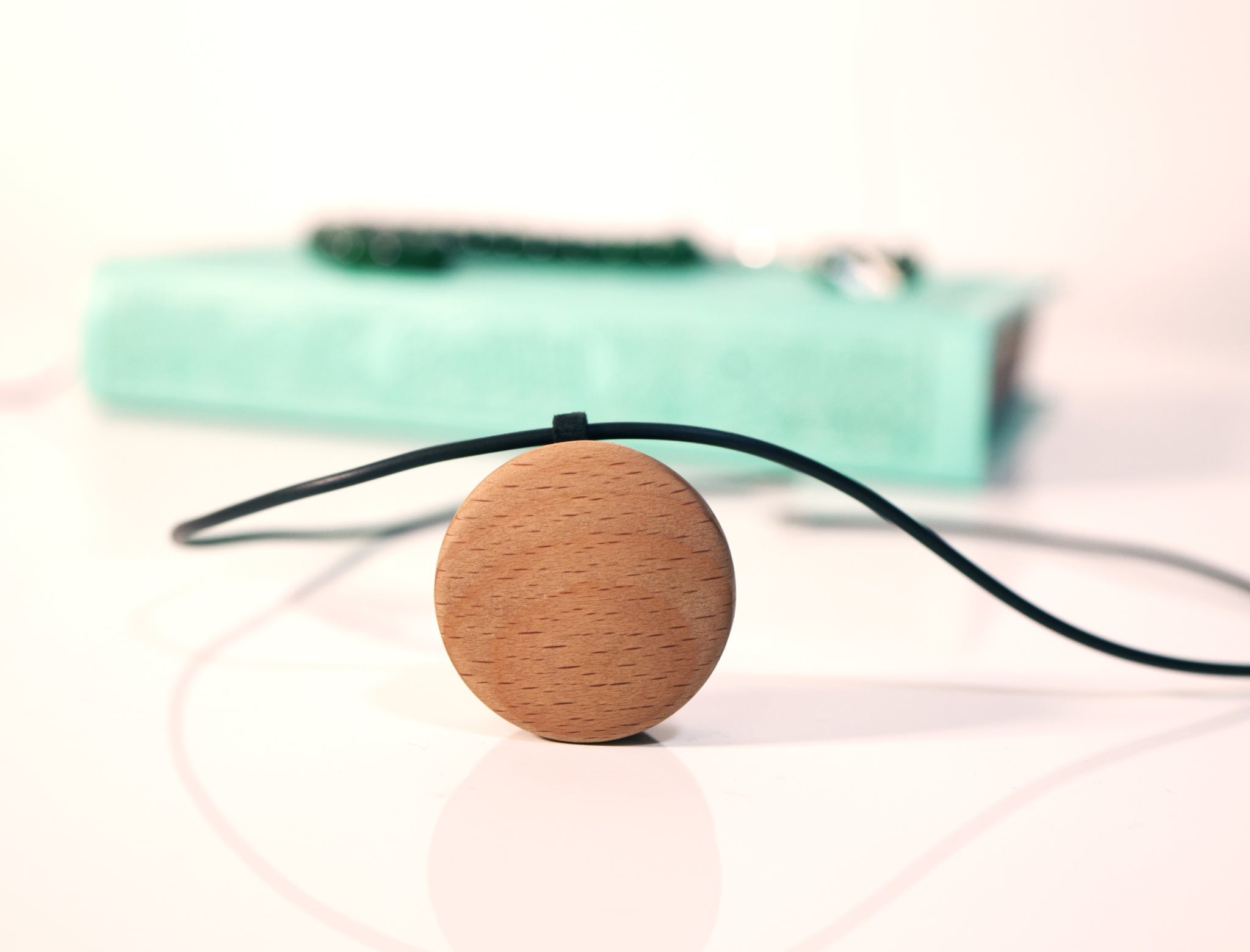
The device we made vibrates when it is pointed toward Makkah. No screen, no audio, no need to look. The wearer holds the pendant, turns slowly, and feels a steady pulse when they face the Qibla. The pulse stops when they turn away. From that point on, the prayer is theirs, in their own room, without help.
We are not the only people working on this. Independent researchers and engineering students have built prototype haptic Qibla devices in university labs for years. Several apps now offer audio-based Qibla guidance for screen-reader users. But the category is small, and most of the work has been done either by small mission-driven companies like ours or by accessibility advocates building their own tools.
If you are a blind or visually impaired Muslim and you want to try our version, contact us through our website. We send devices to community members for honest feedback before we send them anywhere else. You can reach us at qiblasense.com.
Hajj and Umrah
Pilgrimage is intensely demanding logistically, and blind and visually impaired pilgrims usually travel as part of a group with a sighted companion. Several Hajj and Umrah operators in the UK, North America, and the Gulf specifically support disabled pilgrims, including wheelchair Tawaf services at the Haram with dedicated routes on the upper floors.
The Saudi General Authority of Awqaf has expanded accessibility infrastructure at Masjid al-Haram and Masjid an-Nabawi in recent years, including braille signage, dedicated entrances, and audio assistance. The Saudi authorities have also expanded their use of audio guidance and translation services through the Nusuk and Tawakkalna apps, which include screen-reader-compatible features for navigation around the holy sites.
Abdullah ibn Umm Maktum himself performed Hajj. He travelled, he led prayer, he participated in the political life of Medina, and according to some narrations he carried the banner of the Muslims at the Battle of Qadisiyya. The story we are told is not of a man whose blindness defined him. He defined himself, and the Prophet, peace be upon him, gave him space to do so.
Communities and organisations to know
Blind and visually impaired Muslims are a small, tightly networked community internationally. A few organisations worth knowing if you or someone you know is looking for resources, advocacy, or connection:
- Islam By Touch (United States). Distributes braille English Qurans globally and runs accessibility programs at Islamic conferences.
- Blind Muslim Society Malaysia. Community organisation supporting blind Muslims in Southeast Asia.
- National Federation of the Blind Muslim Division (United States). Chapter-based community network within the broader NFB.
- Local chapters of national blind associations in most European countries, the UK, and Scandinavia, which have small but established Muslim subgroups.
These groups are usually the first place to look for braille Quran distribution, Hajj accommodation advice, accessible Islamic schooling, and peer support.
What still needs to change
Three areas where the work is far from finished:
Accessibility of Islamic learning. Most online Islamic courses, classes at local mosques, and traditional madrasa programs were not built with deaf or blind students in mind. Captioning, sign-language interpretation, and accessible course materials are inconsistent.
Mosque accessibility. Many mosques internationally lack ramps, accessible ablution facilities, braille signage, or clear acoustic systems for hard-of-hearing congregants. This is improving in newer construction in Europe and North America, less so in older mosques.
Faith-aware accessibility tools. Most general-purpose accessibility tools were not designed with Islamic practice in mind. The companies building them rarely test for use during wudu, prayer, or fasting. This is a gap, and it is part of the reason a small ecosystem of dedicated Muslim accessibility tools has emerged.
A practical note
If you are sighted and reading this for a friend, family member, or community member who is blind or visually impaired, the most useful thing you can do is ask them directly what they actually need.
Abdullah ibn Umm Maktum was not a man who needed pity. He was a muezzin, a deputy of the Prophet, a scholar, and according to some narrations a warrior. The companions around him did not treat him as a project. They treated him as their equal in faith, and they built the early Muslim community alongside him.
Fourteen centuries later, the principle is the same. Infrastructure should adapt to people. People should not have to constantly adapt to inadequate infrastructure. If a Muslim with a disability tells you something is not working, the response is not to be inspired by their patience. The response is to fix the thing.
If you are a Muslim with a visual or hearing impairment, and you have looked for tools in this space and not found what you need, we would genuinely like to hear from you. Some of the most useful product changes we have made came from a single conversation with someone who tried our device and told us what we got wrong.
QiblaSense makes haptic prayer compass devices that vibrate to point toward the Qibla. The first version was made in response to a request from a blind member of the Muslim community in Stockholm. We write about accessibility, prayer, and the small ways technology can serve Islamic practice. Visit qiblasense.com to learn more.